Brick Fence Repair Services in Nixa, MO
Brick Fence Repair Kings provides brick fence repair, brick column repair, and garden wall repointing services in the Nixa, MO area for both residential and commercial properties, from a few loose bricks to rebuilding a leaning section. Contact us now for a free estimate.
How Much Does Brick Fence Repair Cost in Nixa, MO?
Brick fence repair in Nixa, MO costs anywhere from $400 to $1,760 on average for fixing one damaged section, such as cracked mortar, loose bricks, or a broken column cap. The price depends on how many feet are damaged, whether the section has to be rebuilt, how hard the brick is to match, footing problems, the fence height, and access.
Do You Repair Brick Fences at Homes and Businesses?
Yes, we repair brick fences and garden walls at houses, apartment complexes, churches, schools, and commercial properties. Tell us the property type and roughly how long the damaged stretch is.
Do You Service My Area?
Yes, we cover the Nixa, MO area. Send us the property address and we'll confirm.
Can You Fix a Leaning Brick Fence?
Yes, but a leaning brick fence usually can't be pushed back straight. We take it down to the courses that are still plumb, fix the cause, often the footing or drainage, and relay the same bricks.
Is a Leaning Brick Fence Dangerous?
Yes, it can fall without warning, especially in wind or after heavy rain. Keep children and pets away from it and don't lean anything against it until we've looked at it.
When Should a Brick Fence Be Replaced Instead of Repaired?
Replacement makes sense when most of the fence leans or the footing has failed along its length. If the damage is in a few sections and the rest stands plumb, we usually recommend repairing it.
Do You Repair Brick Columns on Wood or Iron Fences?
Yes, we repair the brick piers between wood, iron, or aluminum panels. We repoint, replace bricks, reset caps, or rebuild a leaning column on a sound base, taking the panels off and rehanging them if needed.
Can You Repair Brick Gate Pillars?
Yes, we repair the pillars that carry driveway and walk gates. A heavy gate pulls on the pillar every day, so we check the hinge anchors and footing and only rehang the gate once the mortar has cured.
How Soon Can You Repair My Brick Fence?
Most repairs are booked as a scheduled job around the weather. A fallen or unstable section that is a safety hazard is usually looked at sooner, and we can brace it until the masonry work starts.
What Information Do You Need for a Brick Fence Repair Quote?
We need the address, photos of the damage and the whole fence, the approximate length and height of the damaged part, and what caused it if you know. Mention any gate, sprinkler line, or tree nearby.
Will I Need to Be Home During the Repair?
No, as long as we can reach both sides of the fence and have your approval on the scope. Leave gates unlocked and keep pets inside on work days.
Can You Repair a Brick Fence We Share With a Neighbor?
Yes, but we need both owners to agree to the work, and usually access from the neighbor's side too. We can give each of you the same written quote so you can split the cost.
Can You Repair an HOA Screening Wall Along a Street?
Yes, we repair subdivision screening walls and entrance walls for HOAs and property managers. Long runs are often repaired in stages, and we can quote each damaged section separately.
Do I Need a Permit to Repair a Brick Fence?
No, in most places a like-for-like repair needs none. Rebuilding a long run, raising the height, or building near a street can need one. Your local building or zoning office decides, and we can tell you what's usually required.
Can I Get a Price Before the Work Begins?
Yes, we confirm the price before starting. If we open up a section and find a cracked footing or rusted rebar, we stop and talk to you before doing any extra work.
Will Homeowners Insurance Pay for Brick Fence Repair?
Yes, often, when a covered event like a storm, fallen tree, or vehicle caused it. Wear, settling, and old mortar usually aren't covered. Your insurer decides, and we can give you photos and an itemized invoice.
How Long Does Brick Fence Repair Take?
Small repointing or brick replacement jobs are often done in a day. Rebuilding a leaning section or a column usually takes several days, and a new footing adds curing time.
Can You Repair Cracks in a Brick Fence?
Yes, we repair cracked mortar joints and cracked bricks. Hairline cracks in the mortar are usually cosmetic, but stair-step cracks or cracks running through several bricks point to movement, and we check the footing before patching.
Can You Repoint the Mortar on My Brick Fence?
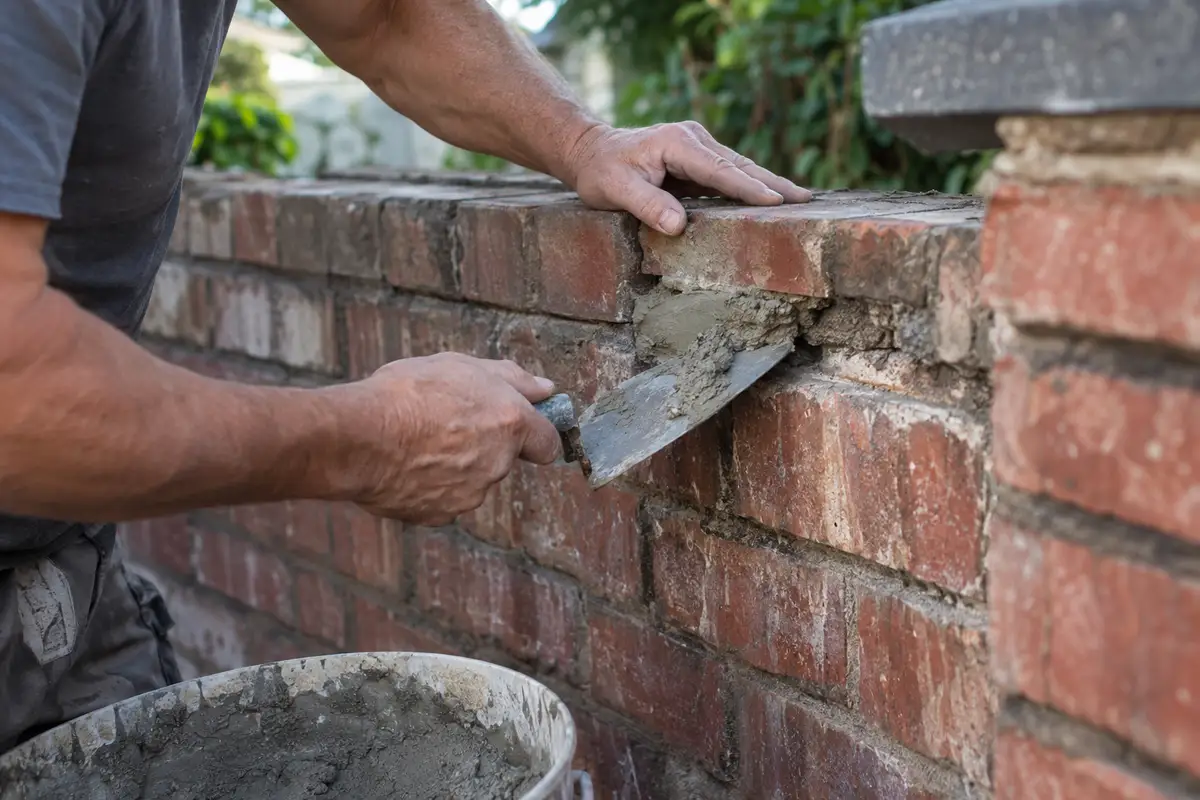
Yes, we rake out the old mortar to about 3/4 inch, or twice the joint width, and pack in new mortar in thin layers. Then we tool the joints to match the existing profile.
Can You Replace Loose or Missing Bricks?
Yes, we cut out loose or broken bricks and set new ones in fresh mortar.
Can You Match My Old Bricks?
Yes, in most cases we can find a close match in size, color, and texture from a brickyard or salvage supplier. Older or discontinued bricks take longer and cost more to source. We reuse sound bricks from the damaged section whenever we can.
Will the New Mortar Match the Old Color?
Yes, we tint it to match. Fresh mortar lightens over about four weeks.
Can You Replace Broken Caps on Top of My Brick Fence?
Yes, we replace or reset brick, stone, cast stone, and concrete caps. A cap that overhangs both faces with a drip edge keeps water out of the wall below, so we fix loose ones before they let water in.
Can You Rebuild a Section of Brick Fence That Fell Down?
Yes, we clear the rubble, save the bricks that are still good, repair or replace the footing, and relay the section to match the rest of the fence.
Can You Fix Crumbling or Flaking Bricks?
Yes, we replace bricks with a flaking face. Flaking is often caused by water getting in or by repairs made with mortar harder than the brick, so we use a softer mortar and look at where the water is coming from.
Can You Repair an Old Brick Wall Laid With Lime Mortar?
Yes, we repoint older walls with a soft lime-rich mortar that matches the original. Hard modern mortar in an old wall can make the bricks crack and spall.
Can You Repair a Brick Fence Hit by a Car?
Yes, we brace or take down what's unstable, then rebuild the damaged section and any column. Get the driver's insurance details and take photos before anything is moved.
Can You Repair Storm Damage to a Brick Fence?
Yes, we rebuild sections knocked down by wind or a fallen tree. Take photos for your insurer, keep people away from anything leaning, and tell us if a tree is still resting on the wall.
Can You Repair a Brick Fence Damaged by Tree Roots?
Yes, but the root has to be dealt with or the wall will crack again. We can rebuild the footing around the root or have an arborist remove it, depending on whether you want to keep the tree.
What Is the White Powder on My Brick Fence?
It's efflorescence, salts carried out of the masonry by water. We can brush or wash it off, but it comes back until the water source, often a missing cap or sprinklers hitting the wall, is fixed.
Should I Trim Plants and Vines Away From the Fence Before You Come?
Yes, clear a working space on both sides of the damaged area if you can, and mark any sprinkler lines. Leave ivy rooted in the mortar to us, since pulling it can loosen bricks.
Can You Repair a Brick Fence in Winter?
Yes, in many cases, but mortar can't be laid on frozen brick. Below 40 degrees we have to heat the materials and cover the work, so many repairs wait for a mild stretch.
What Mortar Do You Use for Brick Fence Repair?
We usually use Type N for repointing and Type S for rebuilding fence sections, matched in strength and color to the existing mortar. Repair mortar should never be harder than the original.
Does a Brick Fence Need a Footing?
Yes, a brick fence needs a solid concrete footing below the frost line, though pier and panel fences may have footings only under the piers. When we find a shallow or failed footing, we fix it before relaying brick.
Can I Repoint a Brick Fence Myself?
Yes, a short section of worn mortar is a fair DIY job if you go slowly. Leave leaning walls, cracked footings, and columns that carry gates to a mason.
Should I Seal My Brick Fence After the Repair?
No, not usually. We'd rather fix the cap and drainage, since water repellents wear off in 5 to 10 years.
How Long Will Repointed Mortar Last?
Good repointing usually lasts decades if water is kept off the wall. Loose caps, missing caps, and sprinklers soaking the base wear joints out much sooner.
Do You Haul Away the Old Bricks and Mortar?
Yes, cleanup and hauling away debris is normally part of the job.
